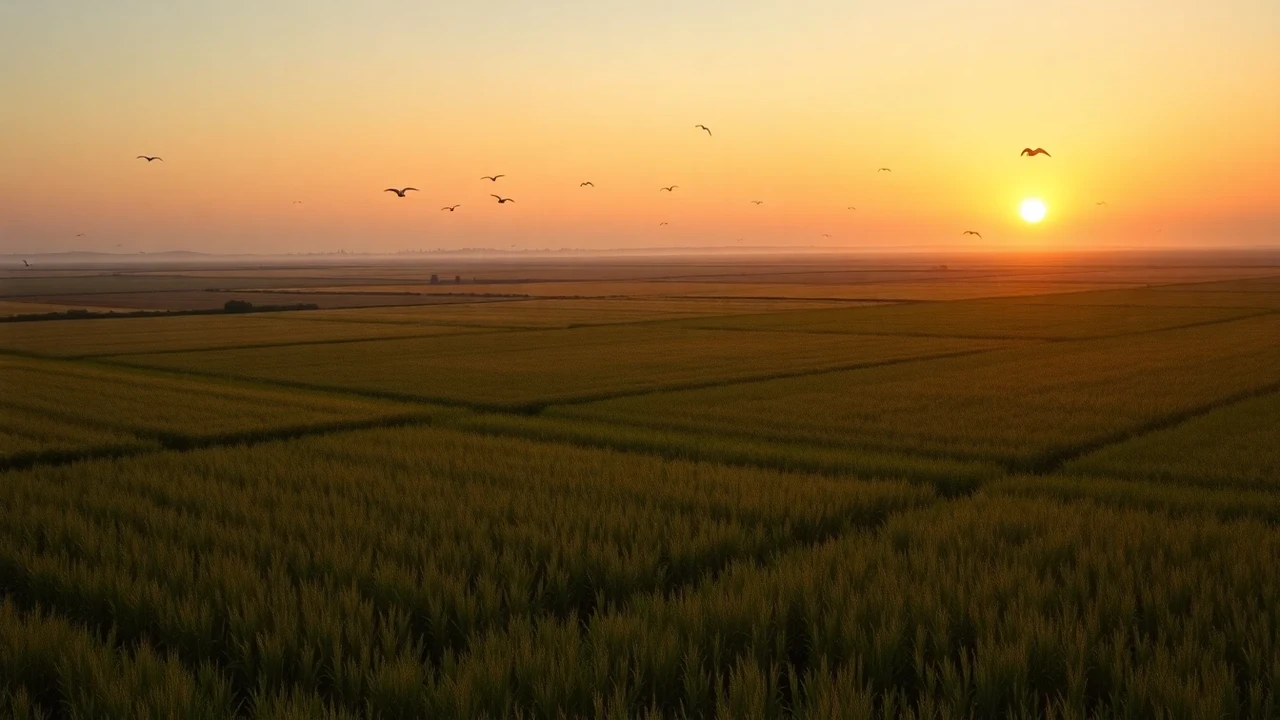
A recent study uncovers a surprising link between the rise of industrial agriculture and the shrinking number of birds we see today. What details reveal about this complex relationship?
Imagine walking through a lush farmland, the hum of machinery blending with the distant chirping of birds—except, today, those chirps are noticeably quieter. The landscape appears familiar, yet subtle shifts in bird populations tell a different story. For decades, agriculture has been the backbone of feeding the world, but recent research suggests that our methods may be quietly squeezing out the very creatures that once thrived alongside us.
Many of us assume that modern farming is simply a matter of technology and efficiency, but beneath the surface lies a web of ecological consequences that we often overlook. The decline of bird species—once abundant and diverse—is increasingly linked not just to habitat loss, but also to specific farming practices that are surprisingly counterintuitive. The focus here isn’t just on pesticides or land clearing, but on the intricate details of how our food is produced.
What is really happening to our feathered friends?

The decline in bird populations has been a quiet crisis unfolding over the past few decades. While climate change often steals the spotlight, a closer look reveals that the transformation of farming landscapes plays a crucial role. Large-scale monocultures—vast fields of a single crop—replace the diverse habitats that many bird species depend on. But beyond habitat destruction, new research points to a surprising culprit: the very chemicals and practices used to maximize crop yields.
In particular, the widespread use of certain pesticides and fertilizers, designed to kill pests or boost plant growth, has unintended side effects. Many of these chemicals disrupt the ecosystems that birds rely on for food, nesting, and migration. For example, insecticides targeting pests often wipe out the insects that are a primary food source for many bird species, creating a domino effect that leads to decreased bird numbers.
How industrial farming practices threaten avian populations
What makes this situation even more intriguing is that some of the practices deemed essential for feeding a growing global population are actually working against bird survival. The use of neonicotinoids—a class of insecticides—has been linked to significant declines in insect populations, which in turn impacts insectivorous birds. The logic is simple: fewer bugs, less food for birds.

Moreover, the focus on high-yield crops often results in habitat homogenization, where the landscape becomes a vast, monotonous sea of corn, soy, or wheat. This uniformity leaves no room for the varied habitats that different bird species need to nest, forage, or migrate. Such landscapes lack the structural diversity—like hedgerows, trees, and wetlands—that historically supported rich bird communities.
Interestingly, some farming strategies that aim to increase efficiency—like the removal of hedgerows and field margins—accelerate bird declines instead of preventing them. These elements, often seen as obstacles to modern mechanized farming, are actually vital for bird biodiversity. Their elimination, combined with chemical use, creates a perfect storm for avian populations.
Looking closer: the tiny details that matter
One might think that a bird’s decline is just about losing habitat or getting poisoned, but the real story is more layered. The recent study highlights how small, often overlooked details—like the timing of pesticide application or the specific crop varieties used—can have outsized impacts. For instance, applying chemicals during migration seasons can disrupt breeding cycles, leading to fewer young birds taking flight the following year.

Another surprising factor is the role of soil health. Industrial farming often involves heavy tillage and synthetic inputs that degrade soil biodiversity. This not only affects plants but also the insects and micro-organisms that form the foundation of many food webs—ultimately impacting bird species that depend on these food sources.
So, what seems like a sterile, efficient farm may, in fact, be a fragile habitat teetering on the edge of collapse—one detail at a time.
The science behind this complex relationship
Research from ecological scientists sheds light on how these practices ripple through ecosystems. A 2022 study published in Environmental Science & Technology revealed that areas with intensive pesticide use saw a 30% decline in insect biomass over a decade, correlating with a 15% drop in local bird populations. The chain is clear: chemical use affects insects, which affects insectivorous birds.
Furthermore, studies show that birds are sensitive to even trace chemicals in their food and water sources. Bioaccumulation can lead to reproductive failures, weakened immune systems, and developmental issues among young birds.
Another research avenue explores the impact of landscape structure. Complex mosaic landscapes—those with patches of native vegetation—support more robust bird communities. Simplified landscapes, typical of industrial farms, lack this complexity, leaving birds exposed and vulnerable.
What can we do about it? Rethinking our agricultural lens
The good news is that awareness is growing, and with it, a chance to rethink farming practices. Incorporating more biodiversity-friendly methods doesn’t mean abandoning productivity—it’s about fine-tuning our approach. Practices like maintaining hedgerows, planting cover crops, and reducing pesticide reliance are proven to support both crop yields and biodiversity.
Agroecology, which emphasizes ecological principles in farming, offers a promising pathway. It promotes crop diversity, soil health, and habitat complexity—creating a more balanced environment where both agriculture and wildlife can thrive. Transitioning to such methods can be challenging initially, but the long-term ecological and economic benefits are promising.
Education and consumer choices also play vital roles. Supporting local farmers who adopt sustainable practices, advocating for policies that protect biodiversity, and choosing products with eco-friendly certifications can accelerate change.
It’s not about perfection, but progress—each small detail, from pesticide timing to farm landscape design, shapes the bigger picture of our ecosystems.
➡️ Tunisian anti‑racism activist Saadia Mosbah sentenced to eight years for money laundering
➡️ Caravan owners urged to take advantage of little-known tax rule amid rising petrol costs
➡️ New Driving Licence Rules For Seniors Aged 70+ Begin 20 March 2026 Nationwide
➡️ Iran war latest: Trump says US considering ‘winding down’ war but other nations must guard Hormuz
➡️ Another storm hitting Ontario Sunday that will bring more rain, snow and freezing rain
➡️ Drone attack on Kuwait: Parts of major refinery shut down after strike
Key takeaways for fostering healthier ecosystems
- Small changes matter: Adjust pesticide timing and reduce chemical use where possible.
- Habitat diversity: Maintain hedgerows, native plants, and wetlands to support bird nesting and foraging.
- Soil health: Minimize tillage and use organic inputs to support microbe and insect life.
- Landscape planning: Design farms with ecological corridors and patches of native vegetation.
- Consumer influence: Support sustainable farms and eco-friendly products.
Looking ahead: the shared responsibility for coexistence
Our relationship with the land is complex and deeply intertwined with the survival of countless species. Recognizing the details—those tiny, often unnoticed aspects—can inspire us to rethink our approach. Agriculture isn’t just about production; it’s about shaping ecosystems that support diverse life, including our own.
As consumers, policymakers, and farmers, we bear collective responsibility. The decline in bird populations isn’t just a statistic—it’s a signal that our ecosystems are fragile and that our choices matter. By paying attention to the details and making thoughtful adjustments, we can help restore a balance that benefits everyone.
In the end, nature’s resilience depends on our willingness to observe, learn, and adapt. Perhaps the smallest details—like seed varieties, chemical application times, or landscape design—are where the most profound change begins.
| Key Point | Detail | Benefit/Interest for Reader |
|---|---|---|
| Impact of pesticides | Disruption of insect populations affecting birds | Understanding chemical effects can lead to better use practices |
| Habitat diversity | Maintaining native vegetation and ecological corridors | Supports biodiversity and resilient ecosystems |
| Soil health | Reducing tillage, organic practices | Enhances soil microbes, benefits plants and animals |
| Landscape design | Incorporating native plants and habitats | Creates refuges for birds and beneficial insects |
| Consumer action | Supporting sustainable farms | Encourages eco-friendly agricultural practices |
FAQ :
- Are all pesticides harmful to birds? Not necessarily; some pesticides are more toxic than others. The key is cautious, informed use to minimize ecological impact.
- Can sustainable farming really make a difference? Yes, integrating biodiversity-friendly practices can help reverse declines and support resilient ecosystems.
- How can consumers help protect bird populations? By choosing organic or sustainably farmed products and supporting policies that protect biodiversity.
- Is the decline reversible? While challenging, targeted efforts and ecological reforms have shown positive results in some regions.